

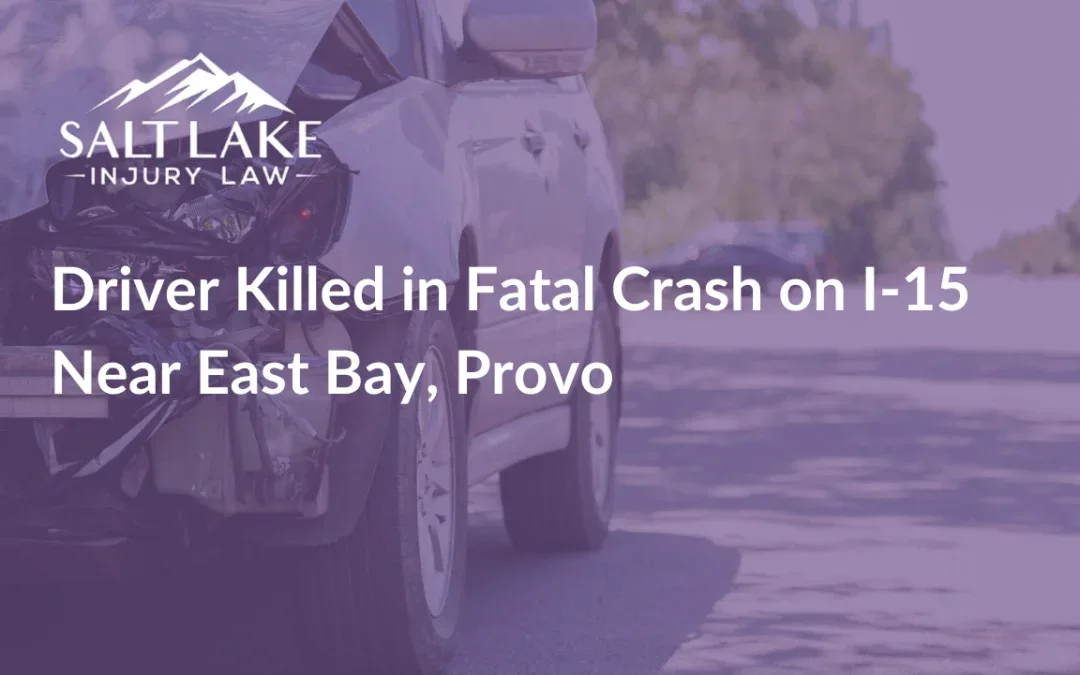
A fatal accident shook Utah County early this morning as a 39-year-old man lost his life after crashing into a stalled semi-truck on I-15. The incident occurred near the East Bay area of Provo around 5:00 a.m., causing significant traffic delays and raising safety concerns among locals. Authorities responded promptly to the scene, where the driver was pronounced dead. The crash has brought renewed attention to roadway visibility and the dangers of stalled vehicles on busy highways like I-15.
What Happened: The Crash Details
The accident happened in the southbound lanes of I-15, just north of the East Bay exit in Provo. According to the Utah Highway Patrol (UHP), a semi-truck had broken down and was stalled in the right lane. The truck had its hazard lights on, but it was still dark, and visibility was low at the time of the crash.
The driver of a passenger vehicle, a 39-year-old man from the area, failed to notice the stopped truck in time and collided with its rear. Despite emergency services arriving quickly, the driver sustained fatal injuries and was pronounced dead at the scene.
The driver of the semi-truck was not injured, and authorities have ruled out impairment as a cause on either side. The focus of the investigation is now on lighting conditions, vehicle placement, and whether additional warning measures could have prevented the tragedy.
Ongoing Investigation by Utah Highway Patrol
UHP troopers are continuing their investigation to understand the full scope of the circumstances leading to the accident. Preliminary reports suggest that low lighting and a lack of reflectors or additional signage on the stalled semi may have played a role in the deadly collision.
Investigators are also looking into whether the truck driver followed all standard safety protocols for breakdowns. While hazard lights were on, there were no emergency cones or flares to alert oncoming drivers. UHP has advised all commercial drivers to carry and use such safety tools in case of roadside emergencies.
The results of the full crash analysis are expected in the coming days and will determine whether any citations or legal actions will follow.
Recurring Safety Concerns on I-15
This isn’t the first time the I-15 corridor near Provo has seen dangerous or deadly crashes. Locals have repeatedly voiced concerns about poor lighting and lack of visibility during early morning and nighttime hours. While traffic volume is lower at these times, the risk increases significantly due to reduced visibility.
The Utah Department of Transportation (UDOT) has received multiple requests over the years to improve lighting, signage, and road conditions, especially near exits like East Bay, where merging traffic creates additional risks.
Today’s crash brings these concerns back into focus, prompting community leaders to call for urgent infrastructure reviews. Lawmakers are also being encouraged to explore funding for highway safety improvements to prevent future tragedies like this one.
Support for Victims: Salt Lake Injury Law
In the aftermath of such accidents, victims’ families often face overwhelming emotional and financial burdens. Salt Lake Injury Law, based in South Salt Lake, Utah, has earned a reputation for standing up for injury victims across the state. Led by experienced attorney, the firm specializes in car accidents, truck collisions, wrongful death, and more.
Our team at Salt Lake Injury offers free consultations and operates on a contingency fee basis, meaning they only get paid if clients win compensation. In tragedies like this Provo crash, families can turn to Salt Lake Injury Law for legal guidance, help with insurance claims, and a compassionate approach during difficult times.
Salt Lake Injury Law is located at 3195 S Main St, Suite 198, South Salt Lake, UT 84115, and serves clients across Utah. They’re committed to making the legal process as stress-free as possible during a time of grief and recovery.
Road Safety Tips and Recommendations
Tragedies like today’s crash highlight the importance of caution and preparedness when driving, especially at night or in low-light conditions. Drivers are reminded to:
- Keep headlights and taillights in good working order.
-
Reduce speed in dark or unfamiliar areas.
-
Always check for road hazards ahead.
-
Pull over safely and use flares or cones in the event of a breakdown.
For truck drivers and commercial vehicles, using reflective triangles and emergency flares is critical when stalled on a highway. These simple actions can be the difference between life and death.
State officials are also reviewing policies to mandate improved lighting and more frequent patrols along stretches like I-15 in Provo. These improvements could help prevent future accidents and save lives.
Final Thoughts
The fatal accident near East Bay on I-15 is a heartbreaking reminder of how quickly life can change. As the investigation continues and the community mourns, attention is turning to how Utah can make its highways safer for everyone. Improved lighting, better emergency response measures, and stricter enforcement of safety protocols for stalled vehicles could all play a role in preventing future tragedies. With legal support from Salt Lake Injury Law, families affected by such incidents have access to compassionate advocacy and the guidance they need during their most difficult times. It’s clear that a combined effort, from drivers, lawmakers, and local leaders is needed to ensure Utah roads are safer, smarter, and more secure for all who travel them.
Disclaimer:
This post is based on secondary sources and is intended solely for use by Salt Lake Injury Law PLLC. We have not independently verified the information from these sources. If you notice any inaccuracies, please contact us so we can make necessary corrections promptly.
At Salt Lake Injury Law, we aim to honor the victims of tragic accidents in Utah while educating the public on prevention and response strategies. This article is not intended as medical or legal advice. The images included are for illustrative purposes and do not depict the actual accident scene.