

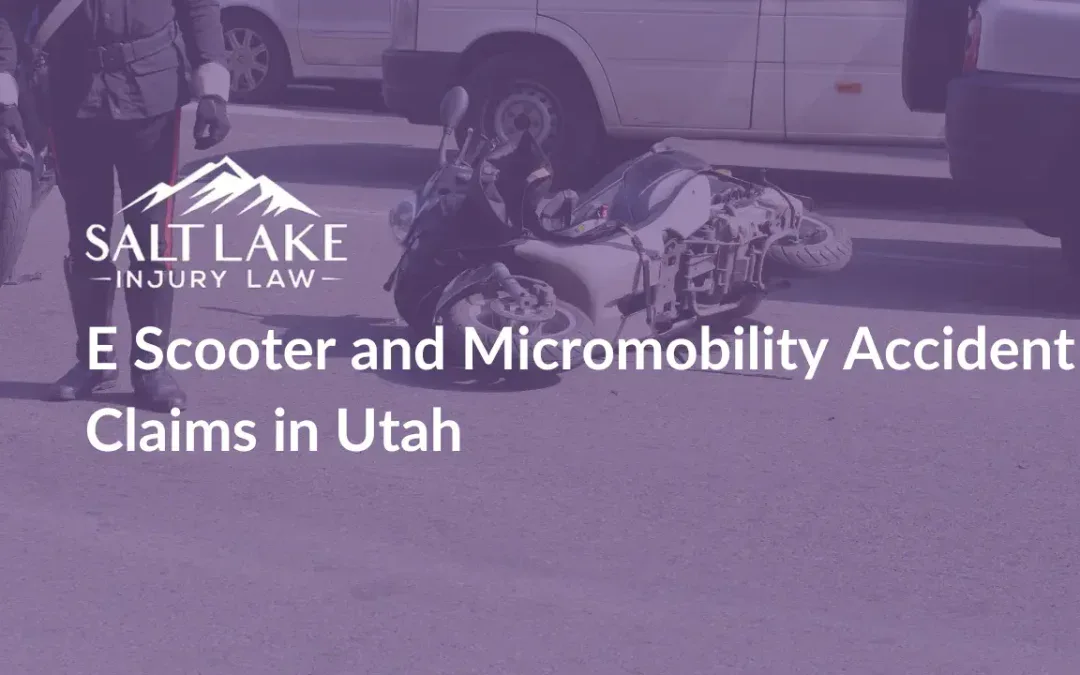
E scooters and other micromobility devices have become increasingly popular across Utah. These devices offer a convenient and affordable way to travel short distances, especially in urban areas. As their use continues to grow, so does the number of accidents involving electric scooters, e bikes, and similar forms of transportation.
Many riders and drivers are unaware of how Utah law applies when a micromobility accident occurs. Questions about fault, insurance coverage, and legal responsibility often arise after a crash. Unlike traditional car accidents, e scooter injury claims can involve multiple parties, including motor vehicle drivers, scooter rental companies, or even local government entities.
Understanding how e scooter and micromobility accident claims work in Utah is essential for anyone injured in one of these incidents. This article explains the legal framework, common causes of accidents, and insurance challenges involved in these claims. It also discusses how Salt Lake Injury Law helps injured victims pursue compensation and protect their rights after a micromobility accident.
What Are E Scooters and Micromobility Devices
Micromobility refers to small, lightweight forms of transportation designed for short distance travel. These devices are commonly used in urban and suburban areas and have become a regular part of Utah roadways. E scooters are one of the most recognized micromobility options, but they are not the only devices included in this category.
In Utah, micromobility devices typically include electric scooters, electric bicycles, hoverboards, and other low speed electric vehicles. Many of these devices are available through shared rental programs, while others are privately owned. Riders often use them on city streets, bike lanes, sidewalks where permitted, and mixed use paths.
Because micromobility devices do not offer the same level of protection as motor vehicles, riders are more vulnerable in the event of a collision. Accidents involving cars, pedestrians, or road hazards can lead to serious injuries. Understanding what qualifies as a micromobility device and how these devices are used is an important first step in understanding the legal issues that arise after an accident.
Common Causes of E Scooter and Micromobility Accidents
E scooter and micromobility accidents can occur for many reasons, often involving a combination of rider behavior, motor vehicle traffic, and road conditions. One of the most common causes is driver inattention. Motorists may fail to see scooters when changing lanes, turning at intersections, or exiting driveways, leading to collisions that cause serious injuries.
Poor road conditions also play a major role in micromobility accidents. Potholes, uneven pavement, loose gravel, and debris can be hazardous for small wheels. Unlike cars, scooters and similar devices are less stable and more likely to lose balance when encountering roadway defects. Inadequate lighting and poorly marked bike lanes can further increase the risk of accidents.
Rider inexperience is another contributing factor. Many riders are unfamiliar with traffic laws or the proper operation of e scooters. Speeding, riding against traffic, or failing to yield can lead to dangerous situations. In some cases, defective equipment such as faulty brakes or steering issues may also contribute to an accident. Identifying the cause of the crash is critical, as it directly affects liability and the success of an injury claim.
Utah Laws Governing E Scooters and Micromobility
Utah law classifies e scooters and other micromobility devices differently than traditional motor vehicles. These devices are generally considered low speed transportation options, but riders are still required to follow specific traffic rules. In many situations, e scooter riders must obey the same traffic signals and signage that apply to motor vehicles.
Utah regulations address where micromobility devices may be operated. Depending on the city or roadway, riders may be permitted to use bike lanes, certain roadways, or shared use paths. Sidewalk use may be restricted in some areas, particularly in busy urban zones. Local governments are allowed to adopt additional rules that affect where and how e scooters can be used.
While helmet use is not always legally required for adult riders, it is strongly recommended due to the high risk of head injuries. Speed limits may also apply, especially for rental scooters that are programmed to operate within certain ranges. Understanding these laws is important because violations can impact fault determinations and injury claims after an accident.
Who Can Be Held Liable in a Utah E Scooter Accident
Determining liability in an e scooter or micromobility accident can be complex because multiple parties may share responsibility. One of the most common liable parties is a motor vehicle driver. Drivers who fail to yield, drive distracted, or violate traffic laws can be held responsible if their actions cause a collision with a scooter rider.
In some cases, the scooter rider may share fault. Riding at excessive speeds, ignoring traffic signals, or operating a scooter in a prohibited area can contribute to an accident. Utah follows a comparative negligence system, meaning compensation may be reduced if the injured rider is partially responsible for the crash.
Scooter rental companies may also be liable under certain circumstances. If an accident is caused by defective equipment, poor maintenance, or inadequate warnings, the company that owns or manages the scooter may be held accountable. Additionally, government entities could be responsible if unsafe road conditions or poor infrastructure contributed to the accident. Identifying all liable parties is essential to pursuing full and fair compensation.
Insurance Challenges in Micromobility Accident Claims
Insurance coverage is often one of the most challenging aspects of e scooter and micromobility accident claims. Unlike traditional car accidents, there is not always a clear insurance policy that applies. Many scooter riders do not carry specialized insurance, and scooter rental companies often provide limited coverage that may not fully compensate injured victims.
In accidents involving motor vehicles, the driver’s auto insurance may apply if the driver is found at fault. However, disputes can arise when insurers argue that scooter riders assume certain risks or that another party is responsible. In some situations, a rider’s own health insurance, homeowners insurance, or renters insurance may become part of the claims process.
Insurance companies frequently attempt to minimize payouts by disputing liability or downplaying the severity of injuries. Because multiple policies may be involved, claims can become complicated and time consuming. Understanding how insurance coverage applies in micromobility cases is critical to protecting your right to compensation.
Injuries Common in E Scooter Accidents
E scooter and micromobility accidents often result in serious injuries due to the lack of physical protection for riders. Head injuries are among the most common and dangerous, especially when riders are not wearing helmets. These injuries can range from concussions to traumatic brain injuries that require long term medical care.
Broken bones and fractures are also frequent in e scooter accidents. Riders may instinctively extend their arms during a fall, leading to wrist, arm, or shoulder injuries. Leg and ankle fractures are common as well, particularly in collisions with motor vehicles or when scooters strike uneven pavement.
Other injuries may include road rash, deep cuts, and soft tissue damage. These injuries can cause significant pain, scarring, and mobility issues. In severe cases, riders may experience long term disabilities that affect their ability to work or maintain daily activities. Understanding the nature of these injuries helps explain why proper medical treatment and legal support are so important after a micromobility accident.
How Salt Lake Injury Law Can Help After an E Scooter Accident
E scooter and micromobility accident claims often involve complex legal and insurance issues. Salt Lake Injury Law focuses on helping injured individuals navigate these challenges and pursue compensation after an accident caused by negligence. Their experience with personal injury cases allows them to identify responsible parties and build strong claims supported by clear evidence.
Salt Lake Injury Law conducts thorough investigations to determine how an accident occurred. This may include reviewing police reports, analyzing traffic and roadway conditions, gathering witness statements, and evaluating whether defective equipment or poor maintenance played a role. When necessary, they also work with professionals to strengthen liability arguments.
The firm handles all communication with insurance companies, protecting clients from unfair tactics designed to reduce or deny claims. Salt Lake Injury Law seeks compensation for medical expenses, lost income, pain and suffering, and long term care needs. If a fair settlement cannot be reached, they are prepared to pursue legal action to protect their clients’ rights.
For individuals injured anywhere in Utah, including Salt Lake County and surrounding areas, Salt Lake Injury Law provides personalized guidance and dedicated legal support. Their goal is to reduce stress, manage the legal process, and help injured victims focus on recovery while their case is handled with care and attention.
What to Do After an E Scooter or Micromobility Accident
After an e scooter or micromobility accident, taking the right steps can protect your health and strengthen any future injury claim. The first priority should always be your safety. Seek medical attention immediately, even if your injuries seem minor, since some symptoms may appear hours or days later.
If possible, report the accident to local law enforcement so an official report is created. This documentation can be important when determining fault and liability. Take photos of the accident scene, the scooter, nearby vehicles, road conditions, and any visible injuries. If the scooter was part of a rental program, report the incident to the company and preserve any related information.
Collect contact details from witnesses and keep records of medical treatment, expenses, and missed work. Avoid making statements to insurance companies without understanding your rights, as these statements may be used to limit compensation. Consulting a personal injury attorney as soon as possible can help preserve evidence, identify liable parties, and ensure your claim is handled properly from the beginning.
Understanding your legal options after a micromobility accident can make a meaningful difference in your recovery and financial future. With the right support, injured riders can focus on healing while their legal rights are protected.
Conclusion
E scooter and micromobility accidents are becoming more common across Utah as these devices continue to grow in popularity. While they offer convenience, they also present unique legal and insurance challenges when accidents occur. Understanding Utah laws, liability rules, and insurance coverage is essential for anyone injured in a micromobility related crash.
Because these claims often involve multiple parties and unclear insurance policies, injured riders may face delays or denied compensation without proper legal guidance. Taking the right steps after an accident and knowing your rights can significantly affect the outcome of your claim.
If you or a loved one has been injured in an e scooter or micromobility accident, experienced legal support can make a meaningful difference. With knowledgeable representation and a clear understanding of Utah personal injury law, injured individuals can pursue fair compensation and focus on recovery while holding negligent parties accountable.
Frequently Asked Questions About E Scooter and Micromobility Accident
Are e scooters legal to use on Utah roads?
Yes. E scooters are legal in Utah, but riders must follow specific traffic laws and local regulations. These rules govern where scooters may be operated and how riders must interact with vehicle traffic.
Who is responsible if I am injured in an e scooter accident in Utah?
Liability depends on the circumstances of the accident. A motor vehicle driver, scooter rider, rental company, or even a government entity may be responsible based on negligence and fault.
Do e scooter rental companies provide insurance coverage?
Most rental companies offer limited coverage, which may not fully compensate injured riders. Coverage varies by company and often includes exclusions that can complicate claims.
Can I still recover compensation if I was partially at fault?
Yes. Utah follows a comparative negligence system, which means you may recover compensation if you are less than fifty percent at fault. Your recovery may be reduced based on your share of responsibility.
Should I contact a lawyer after an e scooter accident?
Yes. E scooter accident claims often involve complex liability and insurance issues. A personal injury attorney can help investigate the accident, handle insurers, and pursue fair compensation.