

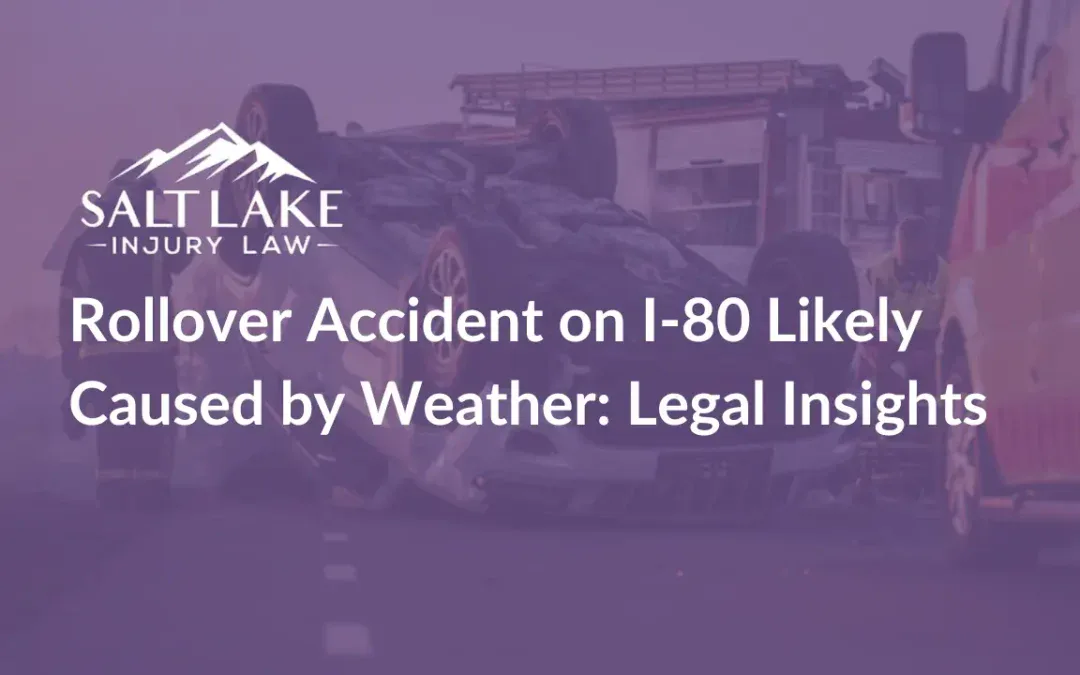
A single-vehicle rollover accident on I-80 left one person injured, with authorities citing weather conditions as the likely cause. This incident serves as a reminder of the risks posed by adverse weather and the importance of safe driving practices during inclement conditions.
Accidents caused by weather-related factors can be legally complex, as liability may not always be straightforward. Understanding Utah’s personal injury laws and how they apply to such cases is crucial for victims seeking justice and compensation.
The I-80 Rollover Accident
The accident occurred on Interstate 80, where a vehicle lost control and overturned, leaving one occupant injured. Utah Highway Patrol (UHP) officials suspect that slippery road conditions caused by weather played a significant role in the crash. Emergency services transported the injured individual to the hospital for treatment.
While weather may have been a key factor, investigators are also examining whether other elements, such as driver behavior or vehicle maintenance, contributed to the rollover.
Weather-Related Accidents in Utah: Common Risks
How Weather Contributes to Accidents
- Slippery Roads:
Rain, snow, or ice reduces tire traction, making it harder to control vehicles. - Reduced Visibility:
Fog, heavy rain, or snow can obscure the road, increasing the risk of collisions. - Sudden Stops:
Drivers may misjudge stopping distances on slick roads, leading to skids or rollovers. - High Winds:
Strong gusts can destabilize vehicles, particularly high-profile ones like trucks and SUVs. - Hydroplaning:
When tires lose contact with the road surface due to water, drivers may lose control entirely.
Driver Responsibility During Bad Weather
Utah law requires drivers to adjust their behavior to account for adverse weather. This includes:
- Reducing speed
- Increasing following distance
- Using headlights to improve visibility
Failure to take these precautions may result in liability, even in weather-related accidents.
Legal Implications of Weather-Related Accidents
Establishing Liability
In weather-related accidents, liability is not automatically excused by poor conditions. Drivers must demonstrate that they acted reasonably given the circumstances.
For example, if a driver was speeding on an icy road or failed to maintain their vehicle’s tires, they may still be held responsible for resulting injuries or damages.
Comparative Negligence in Utah
Utah follows a modified comparative negligence rule, allowing victims to recover damages if their share of fault is less than 50%.
For instance:
- If the injured party is found 30% responsible for the accident (e.g., by not wearing a seatbelt), their compensation would be reduced by that percentage.
Insurance Considerations
Weather-related accidents typically involve claims under auto insurance policies. However, disputes may arise regarding:
- The extent of the damages covered
- Whether negligence contributed to the crash
- Delays in claim processing
Steps to Take After a Weather-Related Accident
If you’re involved in an accident caused by adverse weather, follow these steps:
- Ensure Safety First:
Move to a safe location if possible and avoid further exposure to dangerous conditions. - Contact Authorities:
Report the accident to law enforcement. A police report can serve as valuable evidence for insurance claims or legal proceedings. - Document the Scene:
Take photos of the vehicle, road conditions, and any visible injuries. - Seek Medical Attention:
Even if injuries seem minor, consult a healthcare professional for evaluation. - Consult a Personal Injury Attorney:
An experienced lawyer, like those at Salt Lake Injury Law, can help protect your rights and secure compensation.
Compensation Available to Accident Victims
Victims of weather-related accidents may be entitled to compensation for:
- Medical Expenses:
Includes hospital bills, rehabilitation costs, and ongoing treatment. - Lost Wages:
Covers income lost due to missed work and reduced earning capacity. - Property Damage:
Compensation for vehicle repairs or replacement. - Pain and Suffering:
Non-economic damages for physical discomfort, emotional distress, and diminished quality of life.
How Salt Lake Injury Law Supports Accident Victims
Case Evaluation and Investigation
Salt Lake Injury Law’s attorneys thoroughly investigate weather-related accidents, assessing factors such as driver behavior, road maintenance, and vehicle condition to build a strong case.
Dealing with Insurance Companies
The firm handles all negotiations with insurers, ensuring clients receive fair compensation for their injuries and damages.
Advocacy in Court
If a settlement cannot be reached, Salt Lake Injury Law is prepared to represent victims in court, fighting for their rights and maximizing their compensation.
Preventing Weather-Related Accidents in Utah
For Drivers:
- Slow Down:
Reduce your speed during rain, snow, or icy conditions. - Maintain Your Vehicle:
Ensure tires, brakes, and windshield wipers are in good condition. - Avoid Sudden Movements:
Use gradual steering and braking to maintain control on slick roads. - Stay Updated on Weather Reports:
Plan your trips around adverse conditions whenever possible.
For Authorities:
- Improve Road Maintenance:
Regular snow removal, salting, and sanding can reduce hazards. - Install Warning Signs:
Use electronic boards to alert drivers about icy patches or poor visibility. - Encourage Public Awareness:
Launch campaigns to educate drivers about safe practices during bad weather.
The Broader Implications of the I-80 Accident
The rollover accident on Interstate 80 serves as a stark reminder of the dangers posed by Utah’s winter weather. For the injured individual, recovery will involve not only physical healing but also navigating the financial and legal challenges that follow such accidents.
This incident underscores the shared responsibility of drivers, authorities, and communities to prioritize road safety. Advocacy for better road maintenance and public education can help prevent future accidents and protect lives.
Conclusion: Navigating the Aftermath of Weather-Related Accidents
The I-80 rollover accident highlights the complexities of weather-related crashes and the importance of understanding your rights as a victim. While adverse weather conditions may play a role, driver accountability and adherence to safe practices remain critical.
Salt Lake Injury Law is committed to helping victims of such accidents secure justice and fair compensation. If you or a loved one has been injured in a weather-related crash, contact our team for a free consultation. Let experienced attorneys handle the legal challenges while you focus on recovery.
Disclaimer:
This post is based on secondary sources and is intended solely for use by Salt Lake Injury Law PLLC. We have not independently verified the information from these sources. If you notice any inaccuracies, please contact us so we can make necessary corrections promptly.
At Salt Lake Injury Law, we aim to honor the victims of tragic accidents in Utah while educating the public on prevention and response strategies. This article is not intended as medical or legal advice. The images included are for illustrative purposes and do not depict the actual accident scene.