

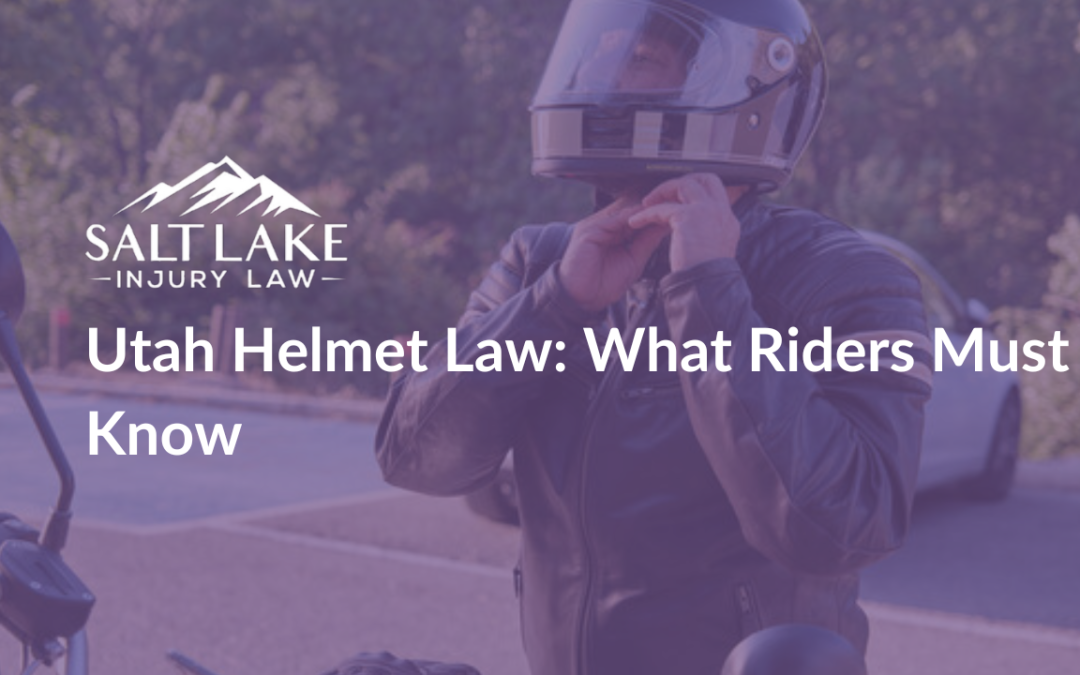
One major topic that often creates confusion is the helmet requirement. Some riders believe helmets are always required. Others think they are optional. The truth depends on age and state law. This confusion can lead to mistakes that affect both safety and legal rights.
The Utah helmet law matters for every rider. It is not just about following the rules. It can also influence how an injury claim is handled after a crash. Wearing or not wearing a helmet may impact the way insurance companies and courts view a case.
In this article, we explain the Utah helmet law in clear terms. We also show why helmets matter for safety, how helmet use affects accident claims, and what steps to take after an injury. Finally, we explain how our team at Salt Lake Injury Law can help riders protect their rights.
What the Utah Helmet Law Says
Utah’s helmet law is clear but often misunderstood. The law requires motorcycle riders and passengers under the age of 21 to wear a helmet. This rule applies whether the rider is operating the motorcycle or riding as a passenger. Riders who are 21 or older may choose not to wear one, but safety experts still recommend it.
The law also sets standards for the type of helmet. It is not enough to wear any head covering. Helmets must meet the safety standards of the U.S. Department of Transportation (DOT). A DOT-approved helmet includes features that protect the head in serious crashes. These helmets are tested for impact resistance, strap strength, and overall design.
There are also differences depending on the type of vehicle. Motorcycles and motor-driven cycles follow the helmet law closely. Scooters, mopeds, and bicycles have their own rules, and local ordinances may add extra requirements. This can create confusion, which is why riders should always check the current state code before hitting the road.
To make this easier to remember, here are the basics:
- Riders and passengers under 21 must wear a DOT-approved helmet.
- Riders 21 and older may ride without a helmet, but it is not recommended.
- Different rules may apply to scooters, mopeds, and bicycles.
- Failing to follow the helmet law can result in traffic citations and fines.
By knowing these rules, riders can stay safe and avoid penalties.
Why Helmets Matter Beyond the Law
Helmets protect riders in ways that go far beyond legal requirements. They lower the risk of life-changing injuries and improve survival rates in crashes. Even when not required by Utah law, wearing a helmet can make the difference between minor injuries and severe trauma.
Statistics highlight this impact. The National Highway Traffic Safety Administration (NHTSA) reports that helmets reduce the risk of head injury by nearly 70 percent. They also reduce the risk of death by about 40 percent. These numbers show why safety experts stress helmet use, regardless of age.
Medical professionals also agree. Brain injuries are among the most common and most devastating outcomes of motorcycle accidents. A helmet absorbs part of the crash force and shields the skull. This can prevent traumatic brain injury, skull fractures, and long-term disabilities.
The Utah Department of Public Safety supports this message. Their campaigns often encourage riders of all ages to wear helmets as part of safe riding habits. Public health officials view helmets as a simple, effective tool to reduce medical costs, hospital stays, and long-term care needs.
Key points to remember:
- Helmets cut the risk of head injury by nearly 70 percent.
- Helmets lower the chance of death by about 40 percent.
- Helmets prevent costly medical bills and long recoveries.
Choosing to wear a helmet is not just about following the law. It is about protecting your health, your family, and your future.
How Helmet Use Can Affect an Injury Claim in Utah
Wearing or not wearing a helmet can change the way an injury claim is handled. Utah law gives riders rights, but insurance companies often use helmet use as a way to reduce payouts. Knowing how the law works can help riders protect themselves.
Utah’s Comparative Negligence Rule
Utah follows a system called modified comparative negligence. This means fault is shared when more than one person contributes to an accident. If a rider is more than 50 percent at fault, they cannot recover damages. If they are less than 50 percent at fault, their compensation is reduced by their share of fault.
How Insurers May Respond
Insurance companies may argue that not wearing a helmet made injuries worse. Even if another driver caused the crash, the insurer may say the rider shares blame. This can lower the final settlement amount.
Riders Under 21 Without a Helmet
If a rider under 21 fails to wear a helmet, it is a clear violation of Utah’s helmet law. This can strongly affect an injury claim. An insurer may argue that breaking the law caused or worsened the injuries. That makes it harder to collect full compensation.
Riders Over 21 Without a Helmet
For riders 21 and older, not wearing a helmet is legal. However, insurers may still argue it shows carelessness. They may claim that certain injuries, especially head injuries, could have been prevented. This argument can also reduce the amount of damages paid.
Why Legal Help Matters
Helmet use is only one factor in a case, but it can complicate negotiations. An experienced personal injury lawyer can challenge unfair claims, highlight the other driver’s fault, and fight to protect compensation. Having strong legal guidance ensures that riders are not blamed unfairly.
What to Do If You’re Injured in a Motorcycle Accident in Utah
A motorcycle crash can feel overwhelming. The shock, pain, and confusion make it hard to know what steps to take. Acting quickly, however, can protect both your health and your legal rights.
The first priority is always medical care. Even if you feel fine, see a doctor right away. Some injuries, like concussions or internal bleeding, are not obvious at first. Medical records also become important evidence in your claim.
After medical care, it helps to document the accident. Photos, witness details, and official reports can all strengthen a case. Simple steps taken early often make a big difference later.
Here are key actions to remember:
- Call 911 and report the accident.
- Get medical attention immediately.
- Take photos of the scene, your injuries, and the vehicles involved.
- Collect names and contact details from witnesses.
- Keep all medical bills, receipts, and repair records.
- Avoid making recorded statements to insurance companies.
Once your immediate needs are met, speak with a personal injury lawyer. Insurance companies may offer a quick settlement, but it is often less than what you deserve. A lawyer can review your case, deal with insurers, and guide you through the process.
Taking these steps helps protect your health and your future. Riders who act quickly often have stronger claims, more accurate evidence, and better outcomes.
Why Choose Salt Lake Injury Law for Motorcycle & Bicycle Accident Cases
When you face serious injuries from a crash, experience and focused dedication matter. Salt Lake Injury Law brings both to every case. We combine deep knowledge of Utah’s traffic laws, personal injury principles, and real courtroom experience to stand by injured riders and cyclists.
We handle both motorcycle accidents and bicycle accidents with the same care and attention. Even though these cases differ in mechanics and risk, the legal challenges often overlap—especially in how helmets, liability, and fault impact compensation.
Here’s how our firm delivers value in these types of cases:
- Specialized expertise in two-wheeled injury law: We understand how helmet use, safety gear, road rules, and vehicle interaction affect both motorcycle and bicycle claims. Our team reviews crash reports, medical records, and reconstruction evidence to build strong cases.
- Aggressive advocacy vs insurers: Insurance companies often try to reduce payouts by pointing to helmet nonuse or shared fault. We counter these tactics with expert testimony, solid evidence, and careful argument. We fight to protect your compensation.
- Local presence & Utah law fluency: Because we practice in Salt Lake and all of Utah, we know how local courts, juries, and insurers operate. We use that insight to tailor strategies that resonate locally.
- Client-first approach: We treat clients as people, not case numbers. We keep you updated, answer your questions clearly, and listen to your concerns. You’ll always be part of the decision process.
- No upfront cost, contingency basis: You won’t pay legal fees unless we secure a recovery. This removes financial risk and aligns our goals with yours.
Whether your injury involves a motorcycle crash, a bicycle crash, or both, Salt Lake Injury Law stands ready to guide you, fight for you, and help you move forward.
Protect Your Rights After a Motorcycle Accident
Understanding the Utah helmet law is important for every rider. Helmets save lives, reduce injuries, and influence how insurance companies handle accident claims. Whether you are under 21 and required to wear one, or over 21 and riding legally without one, your choices can affect your case.
If you are injured in a motorcycle accident, you still have rights. The law may seem confusing, but you do not have to face it alone. Strong legal guidance can make the difference between a small settlement and the compensation you truly need for recovery.
At Salt Lake Injury Law, we focus on protecting riders across Utah. Our team knows how to fight insurance tactics, challenge unfair blame, and build strong claims. We offer free consultations, and you pay nothing unless we win for you.
Your health, your future, and your rights deserve full protection. Call us today at (385) 444-7545 or visit Salt Lake Injury Law to schedule your free case review.
Frequently Asked Questions About the Utah Helmet Law
1. Do all motorcycle riders in Utah have to wear a helmet?
No. Only riders and passengers under 21 must wear a helmet. Riders who are 21 and older may choose not to wear one, although helmets are still strongly recommended.
2. What kind of helmet is required in Utah?
Utah law requires a DOT-approved helmet. These helmets meet federal safety standards and provide better protection during crashes.
3. Does the helmet law apply to bicycles and scooters?
The motorcycle helmet law applies only to motorcycles and motor-driven cycles. Bicycles, e-bikes, scooters, and mopeds follow different rules. Some cities may have their own local helmet ordinances.
4. What happens if I ride without a helmet when the law requires one?
If you are under 21 and ride without a helmet, you may receive a traffic citation and fine. It can also affect your injury claim if you are in an accident.
5. Can not wearing a helmet affect my injury compensation?
Yes. Insurance companies may argue that not wearing a helmet made your injuries worse. Even if another driver caused the crash, your settlement could be reduced under Utah’s comparative negligence rule.
6. Should I wear a helmet if I am over 21?
Yes. While it is not required by law, helmets reduce the risk of head injuries and death. Safety experts recommend that all riders wear helmets every time they ride.
7. How can a lawyer help with a helmet-related accident claim?
A personal injury lawyer can push back against unfair insurance arguments, explain your rights, and fight for fair compensation. At Salt Lake Injury Law, we know how to handle helmet-related cases in Utah.